
Off-grid solar products served 149 million people in 2025, up 26% from 118 million in 2023, according to the Off-Grid Solar Market Trends Report 2026, released on October 27 by the World Bank Group’s Energy Sector Assistance Program (ESMAP) and the global off-grid solar association GOGLA.
Presented in Kigali, Rwanda, the report marks a shift in how the sector is understood. Off-grid solar has moved far beyond basic lighting. It now delivers reliable electricity to households, businesses, farms and essential services — complementing national grids and mini-grids rather than substituting for them.
Solar Home Systems Lead a Maturing Product Mix
Affiliate companies sold 12 million products in 2025, up 12% from 10.7 million in 2023. Growth is concentrated at the higher end: sales of small solar home systems rose 40%, and large systems rose 50%. By contrast, lanterns and solar cooling products declined, while solar water pumps plateaued.
Payment models are shifting alongside the product mix. Pay-as-you-go (PAYG) accounted for 48% of sales in 2025, up from 39% in 2023 — a signal that customers increasingly buy complete power systems on installment terms rather than one-off devices.
Geographically, East and Southern Africa took about 60% of affiliate sales. Kenya remained the largest single market at 2.4 million units. Within sub-Saharan Africa, 47% of solar home system sales were concentrated in just three countries — Kenya, Nigeria and Zambia — while most markets in West and Central Africa remain at an earlier stage of development.
Durability Has Improved Sharply
One of the report’s most consequential findings concerns reliability. Ninety-five percent of surveyed PAYG customers said their quality-verified solar home system was still working four or more years after purchase. Over the past 15 years, off-grid solar products have generated an estimated $28 billion in additional income and savings for customers.
The sector now employs an estimated 219,000 people, with reported full-time employment up 29%. Around 7.4 million people use lanterns and solar home systems to support income-generating activity — which is why productive-use programs have moved to the center of donor strategy, with the productive-use share of off-grid solar grants roughly doubling from 35% in 2022-23 to 71% in 2024-25.
A $11.4 Billion Financing Gap Remains
Off-grid solar is the least-cost solution for at least 398 million people, out of 655 million who had no electricity in 2024. Reaching them will require roughly $11.4 billion between 2027 and 2030 — about $1.3 billion a year in grants and affordability subsidies, plus $1.6 billion a year in equity, debt and receivables financing.
Commercial financing held steady at $315 million in 2025, but it is concentrating fast: three market leaders captured around 70% of corporate financing in 2024-25, while locally-owned companies received just 3.1%. World Bank Group commitments to the sector reached $974 million in fiscal 2025-26.
Affordability remains the binding constraint. About one-third of unelectrified households can afford an entry-level solar home system on PAYG terms, spending up to 5% of household consumption; another third could manage it only at 5-10%.
What It Means for Off-Grid Power Equipment
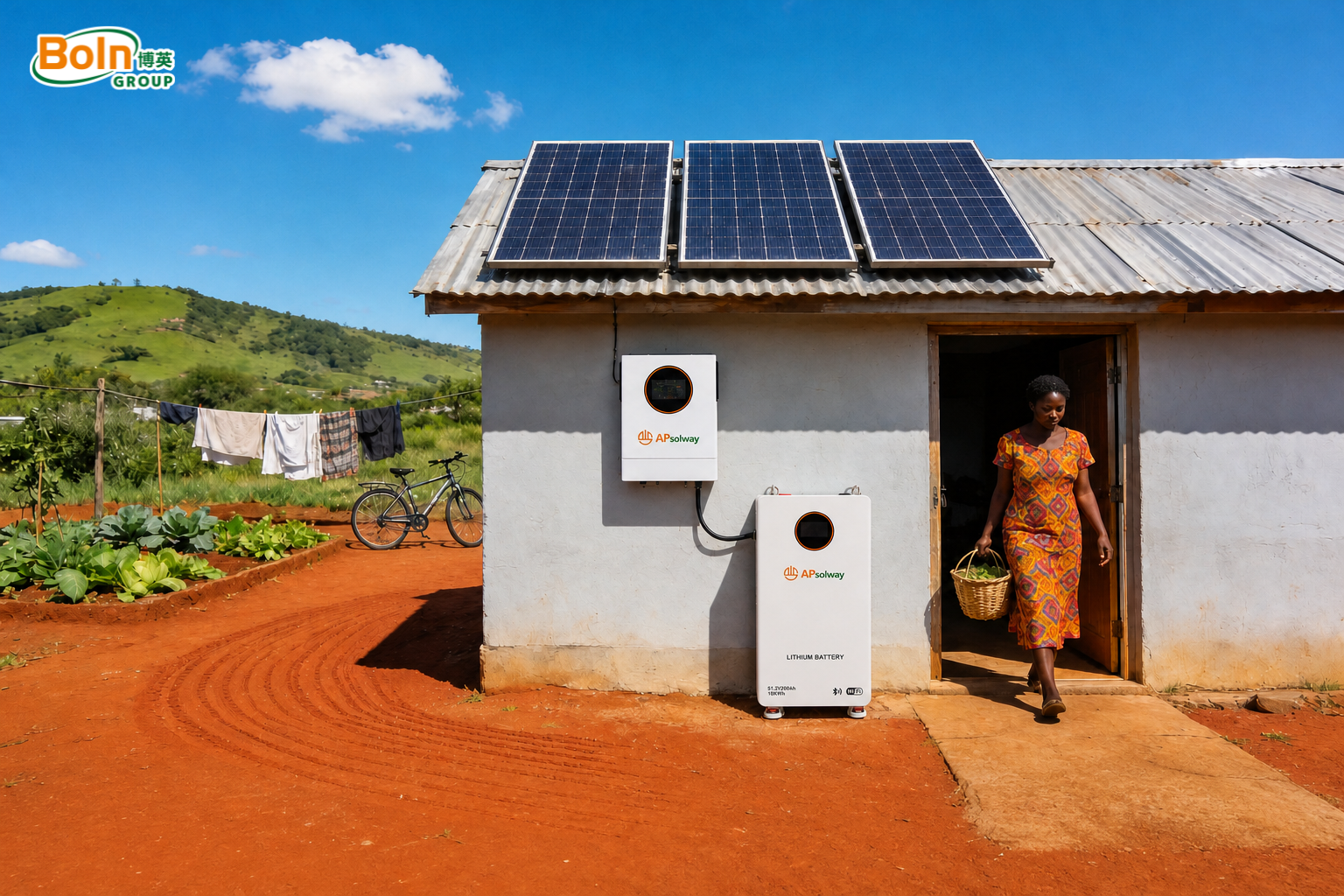
For equipment makers, the report describes a market where the system, not the component, is the product. Customers buying solar home systems and small business power setups need off-grid inverters that handle variable loads, battery storage that survives daily deep cycling, and controls that keep working years after installation — the same priorities that Mission 300, the World Bank and African Development Bank initiative to connect 300 million people in sub-Saharan Africa by 2030, has pushed into national electrification plans.
Solarway builds off-grid inverters, hybrid inverters and lithium battery storage for exactly these conditions: high ambient temperatures, unstable or absent grid supply, and long service intervals far from a repair center.
Explore our off-grid and hybrid power solutions at solarwaytech.com .
Post time: Oct-29-2026