
As the first phase of the 135th Canton Fair comes to a close, a clear signal has emerged: in today’s increasingly competitive global inverter and energy storage market, Asia‑Africa‑Latin America (AALA) markets are becoming the most important growth engine for Chinese new energy companies.
From April 15 to 19, 2024, the first phase of the 135th China Import and Export Fair (Canton Fair) was held in Guangzhou. The total exhibition area reached 1.55 million square meters, with a record 29,000 enterprises participating. The first phase, themed “Advanced Manufacturing”, featured a significantly expanded new energy exhibition area – a major highlight of the fair.
Buyer Structure Is Changing: AALA Share Keeps Rising
Data from this Canton Fair reveals an important trend – emerging markets are becoming the absolute主力 of the event.
By the end of Phase 1, offline overseas buyer attendance reached 125,440, coming from 212 countries and regions, a year‑on‑year increase of 23.2%. Among them, buyers from Belt and Road Initiative (BRI) countries totaled 85,682, accounting for 68.3% of the total. Buyers from Europe and the United States numbered only 22,694, less than 20%.
Even more noteworthy, pre‑registration data had already pointed to this trend. Before the fair opened, pre‑registered buyers from BRI countries increased 45.9% year‑on‑year, while those from the Middle East grew 24.7%. These growth rates far exceed those from European and American markets.
“European and American buyers now account for less than 20%, while AALA customers occupy more than 70% of the seats.” This structural shift means that Chinese new energy companies must fundamentally rethink their global expansion strategy.
Inverter Export Data Confirms the Trend: AALA Demand Is Booming
The change in buyer composition at the Canton Fair is not an isolated phenomenon – inverter export data also confirms the rise of AALA markets.
According to Chinese customs data, from January to March 2025, China’s inverter export value reached RMB 12.2 billion, up 6.6% year‑on‑year. In terms of export regions, Asia, Europe, and Latin America were the top three markets for Chinese inverters in the first quarter, accounting for 37%, 35%, and 12% of exports respectively. Notably, Asia has overtaken Europe as China’s largest inverter export market.
South Asia performed particularly well. In Q1, China exported RMB 1.01 billion of inverters to India, up 72% year‑on‑year, and RMB 690 million to Pakistan, up 55%. India, Pakistan, Myanmar, the UAE, and Saudi Arabia were the top five Asian destinations for Chinese inverters.
Southeast Asia also showed strong growth: in Q1, China exported RMB 1.03 billion of inverters to Southeast Asia, a 47% year‑on‑year increase.
From “New Trio” to “Belt & Road”: New Energy Goes Global at an Accelerating Pace
The strong interest in new energy from AALA markets was fully validated at this Canton Fair. Midea Group showcased single‑phase and three‑phase hybrid grid‑tied inverters and high/low‑voltage batteries, using technological innovation to optimize energy coupling control between household electricity use and PV‑storage systems. Skyworth received more than 1,000 foreign visitors with its new quality productivity offerings including consumer electronics, smart home appliances, and PV‑storage solutions.
This trend is also widely seen outside the fair. A report from CITIC Securities indicates that the overseas residential and commercial energy storage sectors are at a turning point, with AALA demand “spreading from individual points to entire regions”. It expects that leading companies will see significant improvement in Q2 2025, exceeding market expectations. Deye’s Board Secretary clearly stated that “emerging markets such as Pakistan, India, the Philippines, and Myanmar have rigid demand caused by severe power shortages, and our company benefits from an early differentiated focus on these emerging markets.”
In fact, in 2025 AALA markets already account for 53% of China’s inverter exports – a huge volume. Distributed residential and commercial energy storage products are especially well suited to the needs of emerging markets with weak power grids.
“Belt & Road” Green Energy Cooperation Continues to Deepen
The strong demand for new energy products in AALA markets is closely linked to the deepening of green energy cooperation under the Belt and Road Initiative.
Recently, several large‑scale projects by Chinese new energy companies in AALA regions have accelerated. Sineng Electric signed a supply agreement with PowerChina to provide complete high‑efficiency centralized PV inverter solutions for a 100MW solar project in North Oman, expected to be commissioned by the end of 2026. Chongqing Daelim Taiyang undertaken a government‑aided project for Cuba – an 85MW PV power plant with energy storage – which has been successfully connected to the grid, covering multiple key power‑consuming areas in Cuba and operating in an integrated mode of “PV generation + storage peak‑shaving + off‑grid backup”.
The Oman Investment Authority and Botswana Power Corporation signed a power purchase agreement to build a 500MW PV power plant and a supporting 500MW battery energy storage system in Maun, Botswana – the first project under a 3GW energy cooperation framework between the two countries.
From inverter exports to large PV‑storage projects, Chinese companies are building a complete new energy ecosystem in AALA markets, covering products, systems, equipment, and services.
Implications for Chinese New Energy Enterprises
The Canton Fair is a bellwether. The rise of AALA customers means that Chinese new energy companies need to re‑examine their overseas strategies:
1. Market focus is shifting. The previous export pattern dominated by Europe and the US is being broken. AALA markets now account for more than half of China’s inverter exports. For inverter and energy storage companies, the strategic priority of AALA markets must be raised.
2. Product adaptation is critical. AALA markets often have weaker power grids, making distributed residential and commercial storage products more suitable. As a CITIC Securities report notes, distributed products “better meet the needs of emerging markets with weak grid infrastructure”. At the same, high temperatures, dust, and other harsh climate conditions require stronger environmental adaptability.
3. Local service is crucial. Customers in AALA markets demand far more after‑sales support, technical training, and spare parts supply than mature European and American markets. Companies that can provide fast response and local services will gain a competitive edge.
4. Certification and compliance cannot be ignored. Certification standards in AALA countries differ greatly from those in Europe and the US. Obtaining multi‑country certifications early is the “entry ticket” to these emerging markets.
Conclusion
The first phase of the 135th Canton Fair has ended, but the AALA new energy story is just beginning.
The global inverter market is expected to contract by 2% in 2025 and further decline by 9% to 523GW/AC in 2026, intensifying competition in traditional markets. Against the backdrop of a temporary slowdown in European and US demand, AALA emerging markets are becoming a key direction for Chinese new energy companies going global.
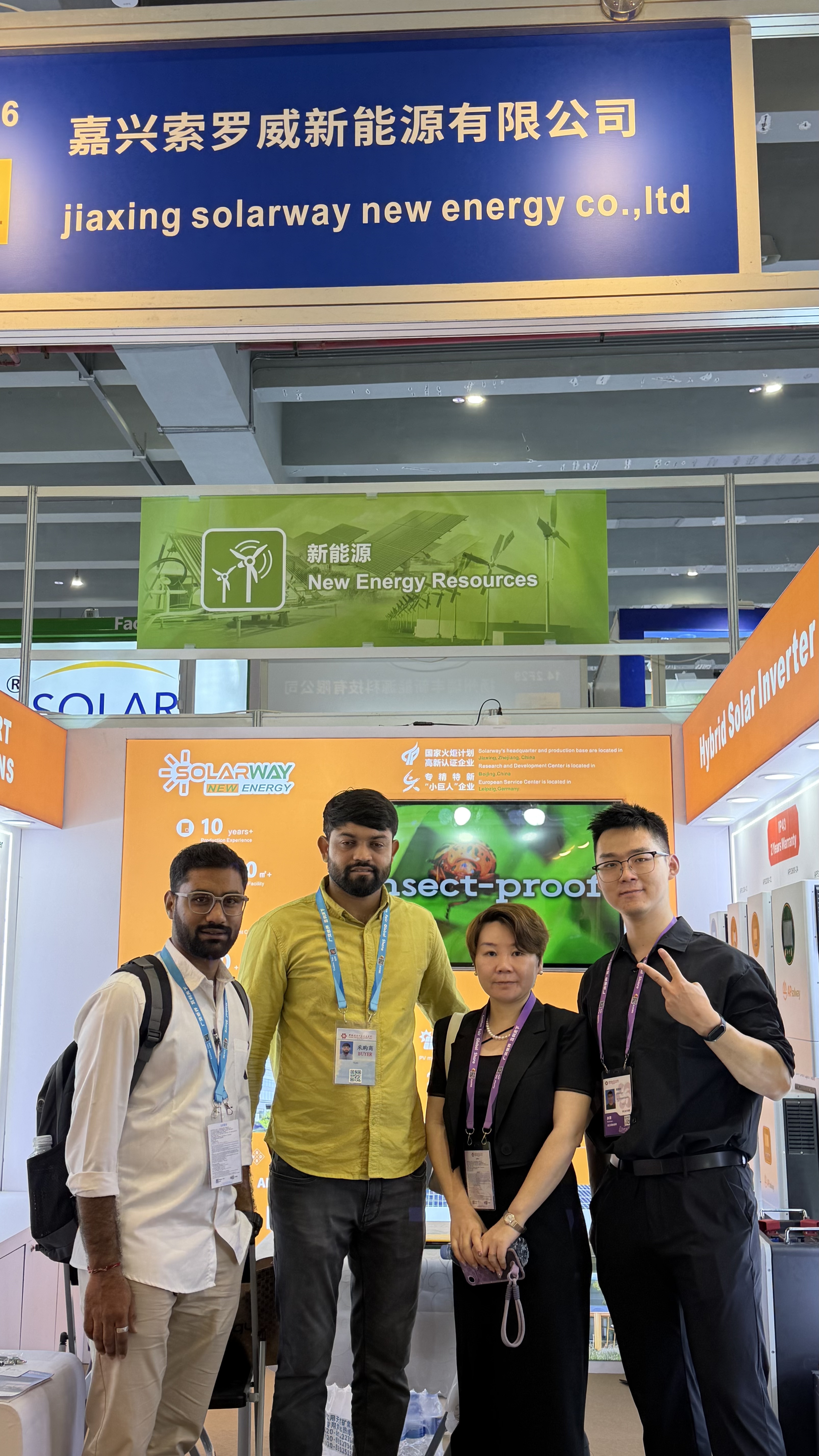
For Chinese inverter and energy storage companies, AALA markets are a blue ocean worth deep investment. During the Canton Fair, Solarway New Energy welcomed a large number of customers from AALA regions at its Electronics & Electricals booth (16.3H03) and New Energy booth (14.2G16). From inverters and industrial sockets to integrated energy storage systems, the enthusiastic engagement lasted throughout the exhibition. As the General Manager of GAC Aion put it, “Overseas buyers, especially those from Belt and Road countries, are very promising.”
The reshaping of the global new energy landscape has only just begun.
Post time: Apr-21-2026