
What is a car power inverter? How to choose the best 12V to 220V converter for camping, trucking, or daily driving? Learn pure sine wave, real rated power, safety features, and top brand Solarway new energy.
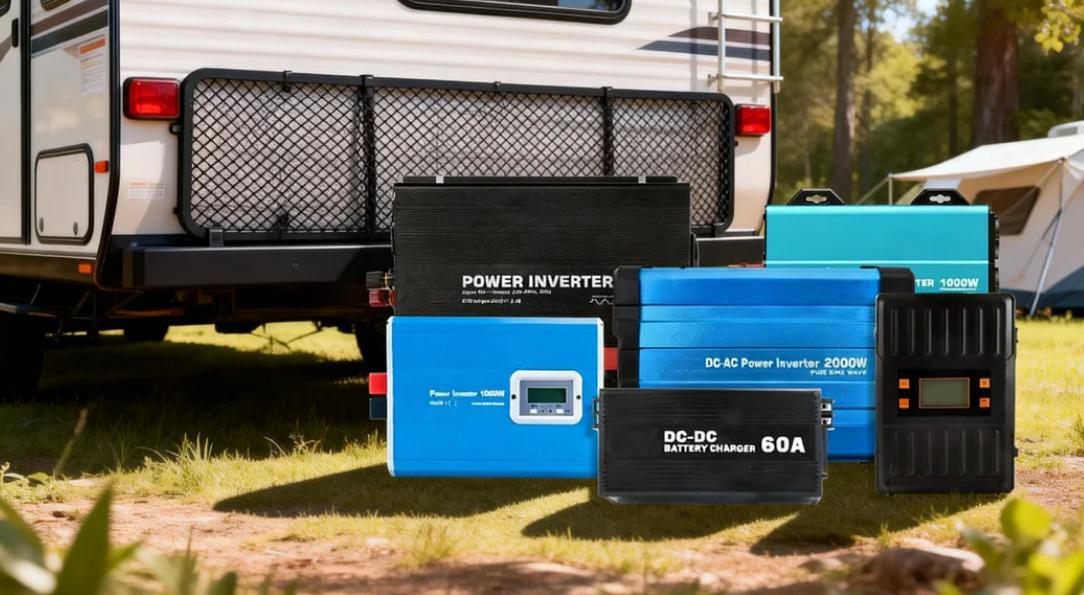
The 2026 Car Inverter Guide – From Definition to Smart Selection
6:00 AM – Alex in New York plugs his inverter into his Toyota Sienna, boils water for pour-over coffee.12:00 PM – Dave in Sydney uses a 3000W inverter to heat water for instant noodles during a truck stop.6:00 PM – Mia in Germany steams rice inside her RV.
This is the everyday reality of car inverter users worldwide in 2026. No longer just for off-roaders, car inverters have become essential for road-tripping families, remote workers, and daily commuters. As power needs evolve from “charging a phone” to “cooking meals and running laptops,” choosing the right inverter is a must.
In 2026, brands like Solarway new energy lead the shift with real rated power, pure sine wave output, and multi-layer smart protection – helping buyers move beyond price-only decisions.
What Is a Car Inverter?
A car inverter converts 12V DC from your vehicle into 220V AC – the same power as your home outlets. It lets you run laptops, rice cookers, kettles, refrigerators, and even medical devices on the road.
How it works: Using high-frequency PWM technology, the inverter steps up voltage and shapes the waveform. Two types dominate the market:
Pure Sine Wave – THD <3%, identical to grid power. Safe for all electronics, motors, and sensitive devices.
Modified Sine Wave – Cheaper, but causes noise, overheating, and potential damage to refrigerators, fans, and medical equipment.
Critical warning: Many cheap inverters list “peak power” (e.g., 3000W) but hide “continuous power” (often only 600W). Always check the rated continuous power specification.
Is a Car Inverter Good? Pros & Cons
Advantages
Power anywhere – Get 220V electricity in your car, truck, or RV.
Emergency backup – Run laptops, cameras, CPAP machines during outages.
Multi-device – Charge drones, camera batteries, and small kitchen appliances.
Cost-effective – A few hundred dollars replaces expensive portable power stations (like Jackery).
Disadvantages
Power limits – Most cars support up to ~600W continuous without modifications. Heavy loads require secondary batteries.
Battery drain – Running with engine off kills your starter battery. Keep engine running or install a house battery.
Safety risks – 58% of consumers consider cheap inverters a major fire hazard. Lack of overload, short-circuit, and thermal protection is dangerous.
Poor support – For no-name brands, repair shipping costs can equal half a new unit. Customer churn from bad service is 38%.
How to Choose a Car Inverter – 6 Key Dimensions
1. Waveform – Always Pure Sine Wave
Pure sine wave (THD <3%) safely runs refrigerators, CPAP machines, induction cooktops, and all sensitive electronics. Modified sine wave is obsolete for serious use.
2. Power Rating – Real Rated Continuous Power
Calculate total wattage of devices you will run simultaneously, then add 30-50% margin. For example:
50W laptop + 60W fridge + 20W lights = 130W → choose ≥200W inverter.
500W rice cooker + 60W fridge + 50W laptop = 610W → choose ≥900W inverter (and consider secondary battery).
Never trust peak power labels alone.
3. Safety Protections – Non-Negotiable
Your inverter must include:
Overload protection
Short-circuit protection
Low-voltage shutdown (prevents dead battery)
Over-temperature protection
Reverse polarity protection
Prefer brands using 125°C automotive-grade solid capacitors (not 85°C consumer-grade).
4. Cooling & Noise
Housing: Full aluminum or metal – plastic traps heat.
Fan: Dual ball-bearing silent fans (up to 8dB quieter than cheap sleeve-bearing fans).
Benefit: No thermal derating in summer, no annoying noise while sleeping in your RV.
5. Voltage Compatibility
Standard cars & SUVs: 12V DC input
Trucks & heavy vehicles: 24V DC input
Some advanced models (e.g., Solarway) support 12V-60V wide range for maximum flexibility.
6. Brand & Warranty
Choose factory-direct brands (like Solarway) that offer:
3-year warranty with “replace-not-repair” policy
International certifications: CE, TÜV, UL, RoHS
Real technical support, not just a chatbot
9 Common Buying Mistakes
The biggest trap. Always check continuous rated power.
Modified sine wave ruins fridge compressors and motors.
85°C capacitors fail quickly. Choose 125°C automotive-grade.
Overheats and derates in summer.
Idling alternator only gives ~600W net. Exceeding drains battery.
Your battery will die and you won’t start the car.
1000W inverter needs at least 10mm² copper wire. Thin wires cause fires.
Many Chinese brands now have CE/TÜV/UL and equal quality at half price.
No certification = no safety. No warranty = throwaway product.
Top Brand Recommendation – Solarway new energy
Solarway is a factory-direct manufacturer specializing in pure sine wave inverters for cars, trucks, RVs, and off-grid systems.
Why Solarway stands out in 2026:
Real rated power – No exaggeration, every unit tested.
Pure sine wave output – THD <3%, safe for all devices.
12V/24V wide voltage – Works with cars and trucks.
125°C solid capacitors + dual ball-bearing silent fans + full aluminum housing.
Multi-layer protection – Overload, short-circuit, low-voltage, over-temp, reverse polarity.
Global certifications – CE, TÜV, UL, RoHS – ready for export.
3-year warranty – Replace-not-repair policy, factory-direct support.
From camping rice cookers to trucker kettles and RV refrigerators, Solarway delivers reliable power for every scenario.
2026 Market Trends & Future Outlook
Pure Sine Wave Becomes Standard
By 2026, over 87% of new car inverters are pure sine wave. Consumers now demand THD <3% to protect expensive electronics and motors.
SiC/GaN Power Modules
Silicon carbide (SiC) and gallium nitride (GaN) are replacing old IGBTs. This means smaller, lighter, cooler, and more efficient inverters – with prices dropping every year.
V2L Goes Mainstream
Most new EVs in 2026 come with V2L (vehicle-to-load) capability. Users now understand “real rated power + pure sine wave + full compatibility” as table stakes.
Trust Rebuilding
Only 34% of brands achieve 50-70% repurchase rates. The market is eliminating low-quality manufacturers. Brands that deliver real performance + transparent specs + solid warranties will win.
Conclusion – 3 Steps to Your Perfect Car Inverter
In 2026, choosing a car inverter is no longer about “watts vs. price.” It’s about reliability, compatibility, and safety.
Step 1 – Calculate your real power needs
List all devices you plan to use simultaneously. Add 30-50% margin. If total exceeds 600W, plan for a secondary battery.
Step 2 – Verify the technology
Must have: pure sine wave, 125°C solid capacitors, ball-bearing silent fan, full aluminum housing, and all safety protections.
Step 3 – Choose a trusted brand
Select a factory-direct brand (like Solarway) with international certifications and a 3-year “replace-not-repair” warranty.
Upgrade your driving freedom to full-scenario power freedom. Your next inverter should be ready for the next 100,000 kilometers.
Post time: May-12-2026