
Global demand for high‑power, long‑life photovoltaic solutions continues to surge as commercial enterprises and utility‑scale solar developers intensify efforts to reduce the levelized cost of energy (LCOE). The newly launched dual‑glass bifacial solar panel series, with power output ranging from 715W up to a peak of 740W, combines ultra‑high conversion efficiency, bifacial energy gain, rugged dual‑glass construction, and comprehensive international certifications.
Traditional single‑sided, single‑glass modules face limitations such as lower energy yield and vulnerability to moisture degradation over decades of outdoor exposure. This upgraded bifacial dual‑glass panel directly addresses these pain points and has become the hardware of choice for ground‑mounted solar farms, commercial rooftop power stations, agrivoltaic projects, and large‑scale distributed energy systems. This article breaks down the core technical strengths, application advantages, and market competitiveness of the 715–740W dual‑glass solar panel lineup.
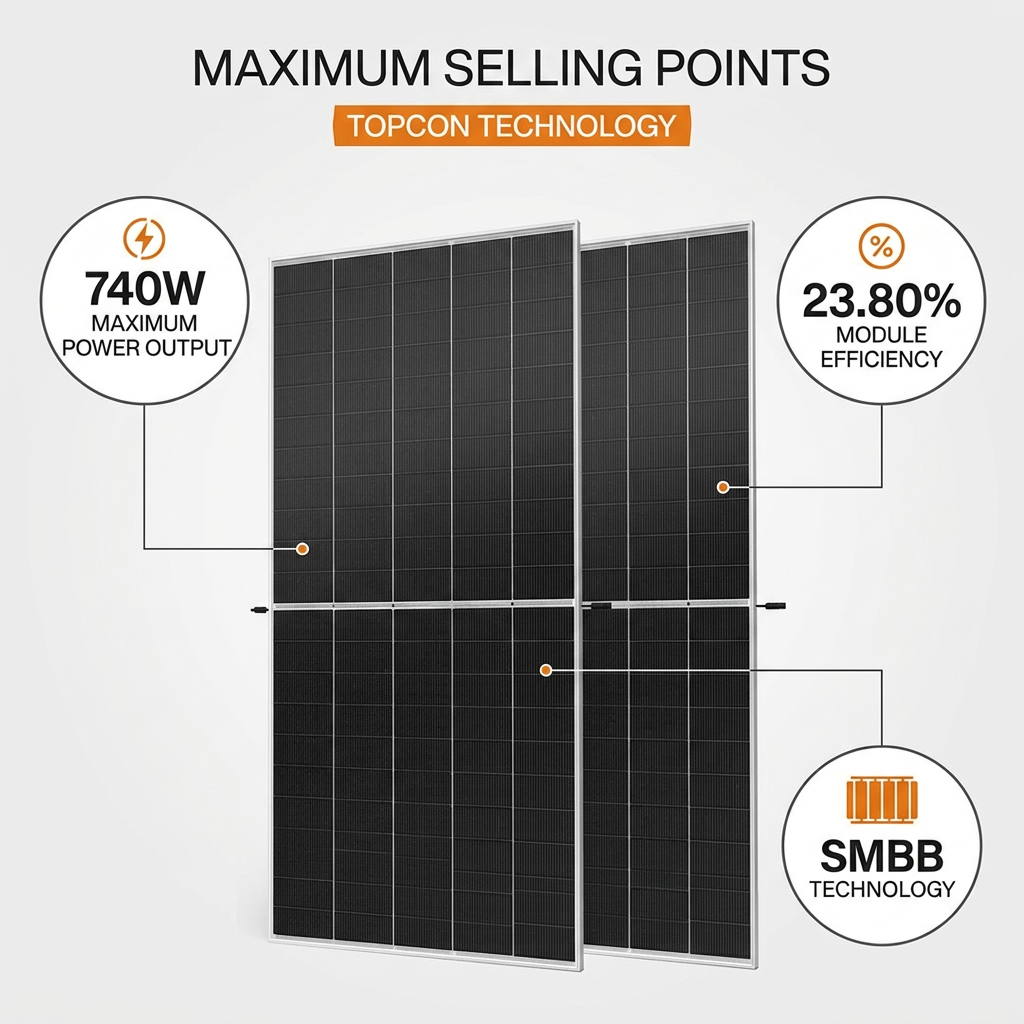
1. Leading Power Output & Top‑Tier Conversion Efficiency
The 715W–740W dual‑glass bifacial module delivers maximum power generation under standard test conditions, achieving a module efficiency of up to 23.80%. Utilizing advanced N‑type TOPCon cell technology, the panel minimizes internal power losses and performs reliably even under low‑light conditions – such as dawn, dusk, and cloudy weather.
Compared with conventional 600W–700W panels, the 715–740W high‑power specification significantly reduces the number of modules required to reach a target system capacity. Fewer panels translate into lower expenditures on mounting structures, cables, and installation labor, greatly reducing the overall Balance of System (BOS) cost for commercial and utility projects. For investors, this directly improves project ROI and shortens the payback period of solar power plants.
2. Bifacial Dual‑Glass Structure Captures Extra Reflected Energy
The biggest competitive edge of this product lies in its bifacial double‑glass design. While conventional panels utilize only front‑side direct sunlight, the dual‑glass module allows the rear side to capture reflected light from the ground, sand, concrete, or vegetation – delivering considerable additional energy yield over the system’s lifetime.
The all‑glass encapsulation eliminates the aging risk associated with plastic backsheets found in traditional panels. It offers exceptional resistance to moisture penetration, ammonia corrosion, and salt spray, making it highly suitable for coastal regions, humid tropical zones, and open‑field solar farms. The sealed glass‑to‑glass construction effectively prevents moisture‑induced cell degradation, supporting a longer service life and stable power output for decades.
Industry hotspot relevance: At SNEC 2026, energy storage occupied more exhibition space than photovoltaics for the first time, and AI data centers are expected to drive an additional 85–100 GW of solar installation demand between 2025 and 2030 – high‑power dual‑glass modules are a critical enabler for this surging demand.
3. Comprehensive Global Certifications Support Worldwide Market Access
All modules in the 715W–740W dual‑glass solar panel series have passed rigorous third‑party testing and obtained a full suite of internationally recognized certifications, including CE, UL, TÜV SÜD, INMETRO, BABT, and PV CYCLE – meeting mainstream market access requirements across Europe, North America, South America, Southeast Asia, and Australia.
Complete certification documentation streamlines customs clearance, project bidding, and local grid‑connection approvals for global distributors, EPC contractors, and project developers. Unlike uncertified generic panels, these modules comply with official requirements for government‑funded renewable energy projects and large commercial tenders, opening doors to high‑value solar markets worldwide.
Policy hot‑button context: In 2026, the U.S. Section 201 safeguard tariffs have been extended for the full year, imposing an additional 14.5% duty on crystalline silicon photovoltaic cells and modules. Meanwhile, the U.S. has levied anti‑dumping duties of up to 123% on modules from India, Indonesia, and Laos. Having full international certifications makes these high‑power dual‑glass panels a strategic choice for global project developers to navigate trade barriers and secure supply‑chain stability.
4. Rigorous Reliability Testing Ensures Long‑Term Outdoor Performance
Every dual‑glass solar panel undergoes stringent testing in accordance with IEC international standards before delivery. The dual‑glass structure significantly improves resistance to thermal cycling, humidity‑freeze shocks, and mechanical loading, maintaining stable performance under extreme temperature swings, heavy snow loads, and high‑wind conditions.
Low power degradation is another key highlight. Optimized encapsulation technology effectively suppresses Potential Induced Degradation (PID), ensuring the module retains high power output year after year. For utility‑scale projects with operational lifespans of 25–30 years, reliable low‑degradation performance guarantees consistent energy generation and predictable revenue throughout the entire project lifecycle.
Market data support: According to GM Insights, the global bifacial solar panel market was valued at $204.2 billion** in 2025 and is projected to grow at a **9.6% compound annual growth rate (CAGR)** from 2026 to 2035, reaching **$499.3 billion by 2035 – high‑reliability dual‑glass modules are a primary driver of this expansion.
5. Wide Application Scenarios for Commercial & Utility Deployment
The 715W–740W(https://www.solarwaytech.com/715w-740w-solar-panel-topcon-technology-source-factory-product/) dual‑glass solar panel targets large‑capacity power generation applications, covering multiple high‑growth market segments:
- Utility‑scale ground‑mounted solar power plants;
- Commercial & industrial rooftop PV systems;
- Agrivoltaic (agricultural complementary) solar projects;
- Remote off‑grid industrial power supply;
- Large‑scale solar‑plus‑storage integration systems.
Distributors and EPC partners can deploy this product across diverse regional projects – whether in high‑latitude areas with diffuse light or high‑albedo desert and grassland sites. In open‑ground installations, the bifacial extra power gain delivers particularly pronounced economic benefits.
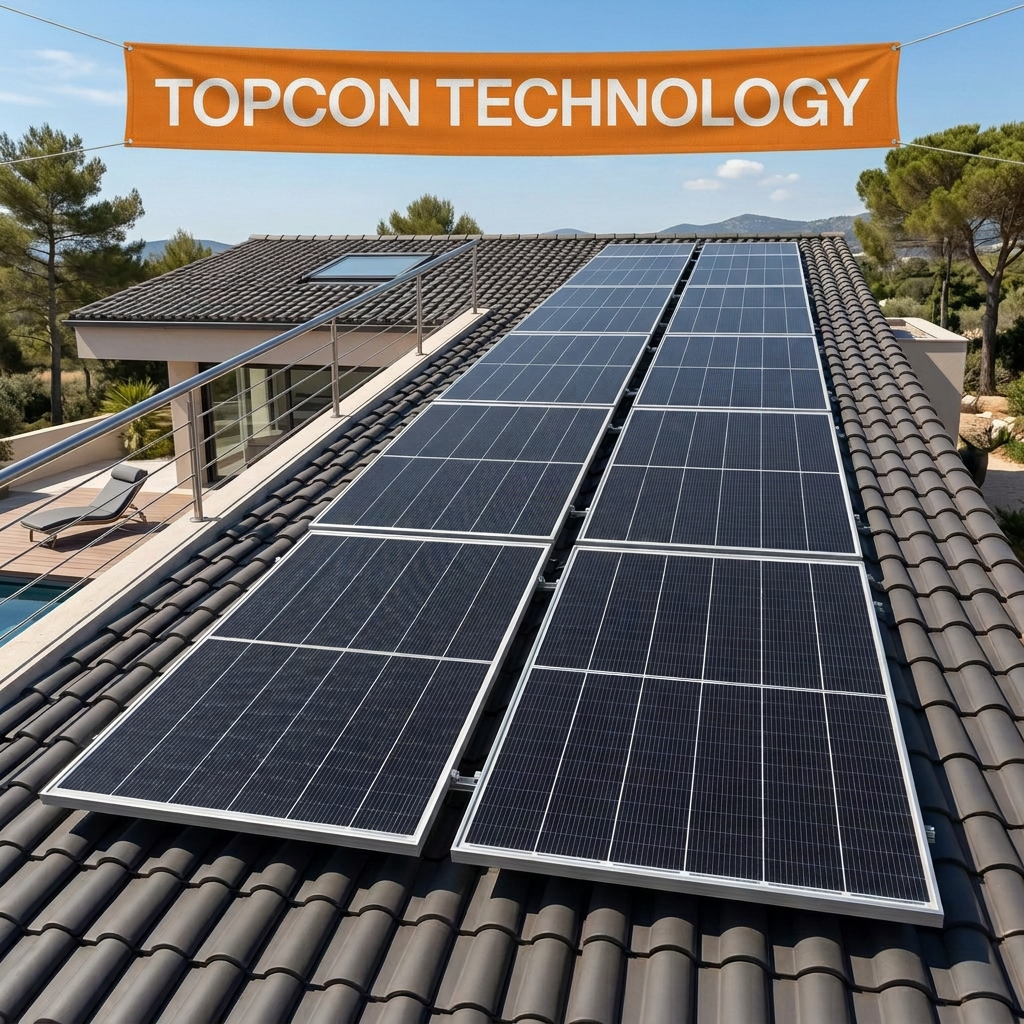
Industry direction: SNEC 2026 conveyed a clear signal – the PV industry is shifting from component‑centric growth to system‑integrated solutions, with energy storage and AI becoming core design elements. The 715–740W dual‑glass module, as the central power‑generating unit in these integrated systems, perfectly aligns with this transition.
6. Market Outlook: High‑Power Dual‑Glass Modules Become the Mainstream Trend
The global PV industry is accelerating its shift toward higher‑power, bifacial, and longer‑lifetime modules. High‑power dual‑glass bifacial panels are gradually replacing traditional single‑glass monofacial products in large‑scale projects. As power plant operators pursue higher energy output and lower long‑term O&M costs, demand for 700W+ dual‑glass solar panels continues to rise year over year.
Notably, SolarPower Europe forecasts global PV installations to reach 612 GW in 2026 – despite an 8% decline from the record 664 GW in 2025, this marks the first annual adjustment in over two decades, signalling that the industry is moving from sheer scale expansion to a new phase of value optimization. In this context, high‑power dual‑glass modules that can reduce LCOE will become the core competitive advantage for project developers.
The 715W–740W dual‑glass bifacial solar panel is perfectly aligned with this market trend. With standardized quality control, complete certification support, and mature mass‑production capacity, the product offers a flexible one‑stop procurement solution for global solar distributors and project contractors. Manufacturers also support OEM customization of technical parameters, packaging, and labeling for bulk tender orders. https://www.solarwaytech.com/glass-solar-panels/
Conclusion
Combining peak 740W power output, 23.80% ultra‑high efficiency, bifacial dual‑glass design, comprehensive global certifications, and proven long‑term reliability, the 715W–740W solar panel series delivers a cost‑effective photovoltaic solution for commercial and utility solar projects.
In an era where the investment value of renewable energy becomes increasingly critical, this high‑performance dual‑glass bifacial module helps PV industry stakeholders maximize power‑generation revenue and reduce total project costs. As global clean‑energy construction accelerates, high‑power bifacial dual‑glass solar panels will capture an even larger share of the international PV market, serving as core equipment for achieving global carbon‑neutrality goals.
Post time: Aug-04-2026